![DIY LM3886 Amplifier PCB [chipamp.com] - Image 1](https://analogclassics.com/wp-content/uploads/2021/07/photoroom_20250205_161207.jpeg "photoroom_20250205_161207")
![DIY LM3886 Amplifier PCB [chipamp.com] - Image 2](https://analogclassics.com/wp-content/uploads/2021/07/photoroom_20250205_161316.jpeg "photoroom_20250205_161316")
![DIY LM3886 Amplifier PCB [chipamp.com]](https://analogclassics.com/wp-content/uploads/2021/07/photoroom_20250205_161207-150x150.jpeg)
![DIY LM3886 Amplifier PCB [chipamp.com] - Image 2](https://analogclassics.com/wp-content/uploads/2021/07/photoroom_20250205_161316-150x150.jpeg)
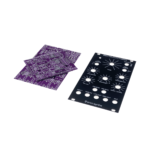
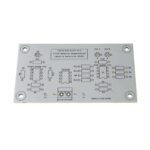
DIY LM3886 Amplifier PCB [chipamp.com]
$8.95
11 in stock
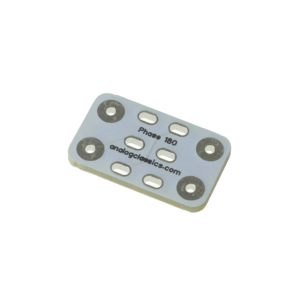
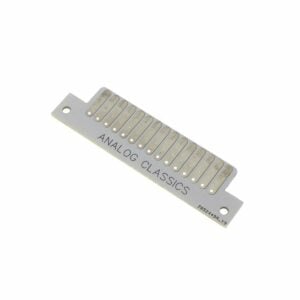
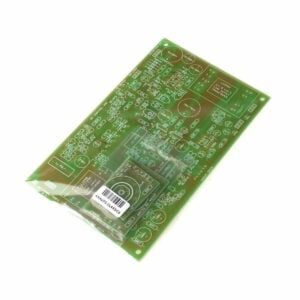
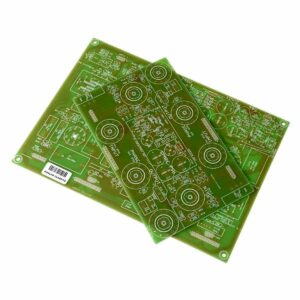
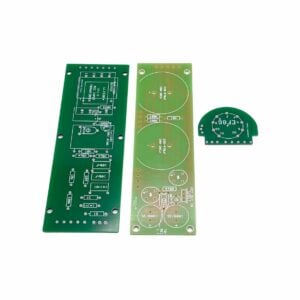
DIY LM3886 Amplifier PCB – each blank pcb is sealed and bagged for protection during shipping. Only the blank PCB pictured is included. The build guide and schematic can be found here and are summarized below:
LM3886 Amplifier Kit Overview
The LM3886 kit is a DIY amplifier based on National Semiconductor’s LM3886 integrated circuit. It uses a non-inverting op-amp design and a snubberized power supply developed by Carlos Filipe (“CarlosFM”). The kit can be built as either a dual mono or stereo amplifier.
Key Terms
-
Non-Inverting: The signal output is in phase with the input.
-
Negative Feedback (NFB): Reduces distortion and stabilizes gain.
-
Gainclone: Generic name for chip-based power amplifiers like LM3886/LM3875.
-
PS: Power supply.
-
PCB: Printed circuit board.
Kit Components
Each version (dual mono or stereo) includes:
-
LM3886 amplifier boards and ICs
-
Snubberized power supply PCBs
-
Resistors, capacitors, diodes, LEDs, and terminal blocks
-
Optional feedback and input capacitors for fine-tuning sound or DC offset
Assembly Steps
-
Soldering: Use a quality temperature-controlled iron (~30 W). Apply heat and solder simultaneously for clean joints; trim leads neatly.
-
Amplifier PCB: Start with small resistors, then capacitors, and finally the LM3886 chip. Observe polarity on electrolytics.
-
Power Supply Board: Install resistors, capacitors, diodes, and LED. Double-check polarity.
-
Cleaning: Remove flux with alcohol for reliability and appearance.
Power and Setup
-
Transformer: Dual-secondary, 18–25 VAC recommended (produces 25–35 V DC after rectification).
-
VA Rating: 160–330 VA is typical; larger units give better voltage regulation but are not essential.
-
Fusing: Use a slow-blow fuse (2–3 A depending on transformer size).
-
Connections: Link amplifier inputs/grounds to RCA jacks, power leads to supply board, and chassis ground to earth.
-
Testing: Power up without speakers first; verify low DC offset (<100 mV).
Chassis and Safety
-
Always ground the metal case to mains earth.
-
Keep signal wiring away from the transformer to reduce hum.
-
Ensure proper heat sinking; a modest aluminum plate (≈3 × 3 × ½ in.) is adequate.
-
Avoid shorted turns when mounting toroidal transformers—don’t loop conductive brackets around the core.
Volume Control
You can control volume externally (receiver/preamp) or directly via:
-
A potentiometer or resistor network for attenuation.
-
To prevent popping noises, use a “make-before-break” type switch.
-
Adjust gain (Rf/R3 ratio) if the amplifier clips too easily—higher R3 lowers gain.
*A special thanks to designer Brian Bell for releasing this project to the public domain.
*Analog Classics does NOT provide build support for this project.
| Brand | Analog Classics |
|---|---|
| Condition | New |
| Color | White |
| Compatible Brand | chipamp.com |
Related products